
Verrucae, which are typically challenging to treat, are a common foot problem that can affect anyone. Relief is available. Our podiatrists will tailor care to your needs. We specialise in diagnosing and treating verrucae effectively to get our patients back on their feet, pain-free.
Discover some of the common symptoms and causes of verrucae below, and then call us to learn how our professional treatment options can work for you.
Verrucae are caused by the human papillomavirus (HPV), which enters the skin through small breaks, cuts, or abrasions. Unlike warts that appear on other areas of the body, verrucae are often subjected to pressure from standing or walking.
This pressure can cause them to develop overlying hard skin, and sometimes they can be painful.
These stubborn growths may appear individually or in clusters, which are called mosaic warts.
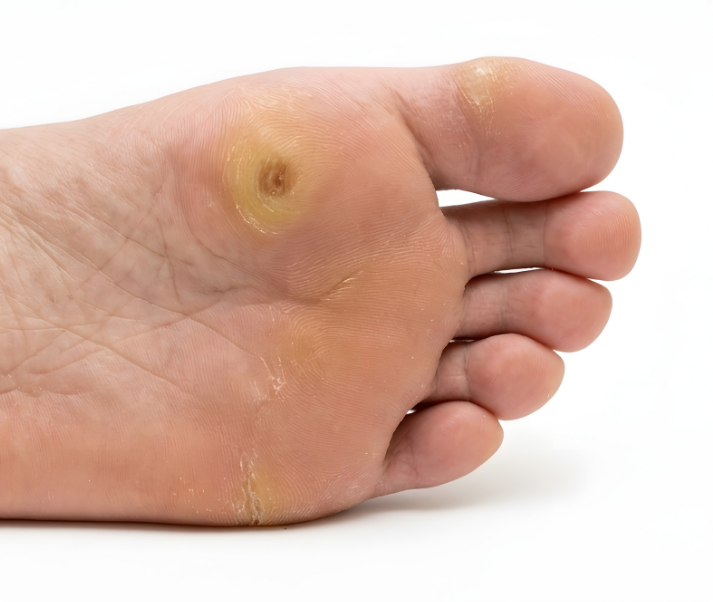
To do that, you must be able to identify verrucae.
Look for these common signs and symptoms:
- A flat, hard growth, often with a rough surface, on the sole of the foot
- Tiny black dots in the centre of the growth, which represent trapped blood vessels
- Pain or tenderness when walking, standing, or applying pressure
- A small, hardened area of skin surrounded by soft tissue
The virus thrives in moist, warm environments, such as swimming pools, locker rooms, communal showers , making these areas common sources of infection.
As a result, athletes, swimmers, and gym-goers are particularly susceptible to developing plantar warts, also known as verrucae.
The team at Cheshire Foot Clinic will carefully examine your affected area to identify if the growth is a verruca or another type of lesion.
Our experts will also assess the severity of your condition before determining a treatment plan. Factors we’ll consider include your pain level and how long the issue has been present.
These include over-the-counter salicylic acid solutions — which help remove the wart’s hard outer layer — and applying duct tape to suffocate the virus.
Another method involves soaking the foot in warm water and gently filing the verruca with a pumice stone to manage discomfort.
While these approaches may help in mild cases, they may also lead to spreading of the verrucae or damage to healthy skin.
Swift microwave therapy has no down time after treatment and treatment is repeated every 6 weeks for up to 6 applications.
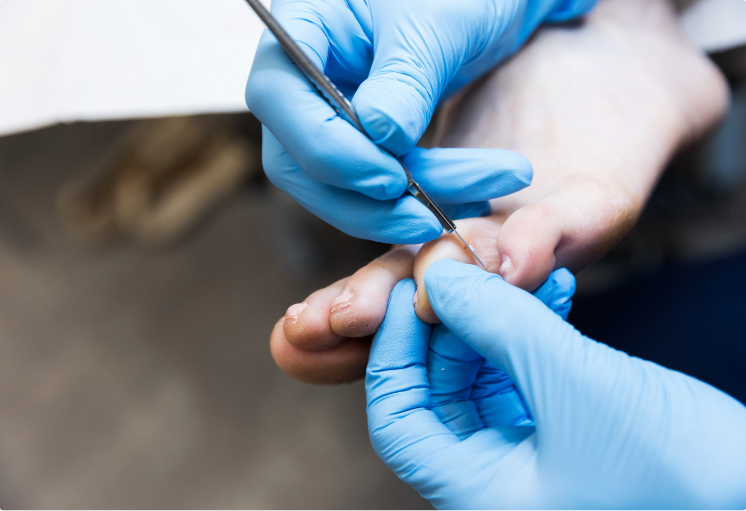
Verruca Needling typically require a few days to a week for complete recovery and may be repeated 8 weeks after the first treatment if the verruca has not resolved.
