
TREATMENTS

Posterior Tibial
Tendon Dysfunction

Helping you move comfortably

BOOK AN APPOINTMENT


TREATMENTS

Posterior Tibial
Tendon Dysfunction

Helping you move comfortably


BOOK AN APPOINTMENT

POSTERIOR TIBIAL TENDON DYSFUNCTION (PTTD) & ADULT ACQUIRED FLAT FOOT
Understanding a common cause of progressive arch collapse and inner ankle pain
Posterior Tibial Tendon Dysfunction (PTTD) affects a key tendon that supports the arch of the foot. When this tendon weakens or fails, it can lead to pain, instability, and in advanced cases, a fallen arch known as Adult Acquired Flat Foot.
BOOK YOUR APPOINTMENT NOW
UNDERSTANDING PTTD

The posterior tibial tendon connects the tibialis posterior muscle at the back of the lower leg to the bones in the centre of the sole of the foot.

It sits deep behind the calf muscles and plays a vital role in supporting foot structure.

The tibialis posterior muscle is responsible for moving the foot downward and inward. The tendon helps stabilise the arch of the foot, support the structures underneath it, and assist in lifting the heel during movement.

Posterior Tibial Tendon Dysfunction (PTTD) is a disabling condition caused by the loss of function of the tibialis posterior tendon.
BOOK YOUR APPOINTMENT NOW
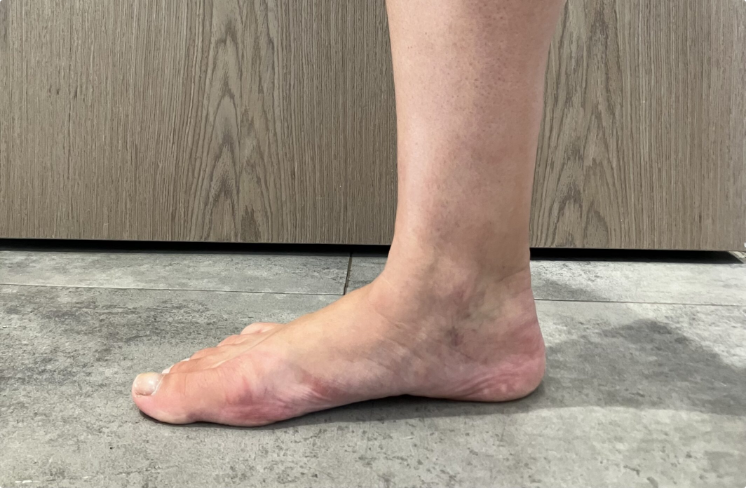
Side view of foot showing a flattened arch
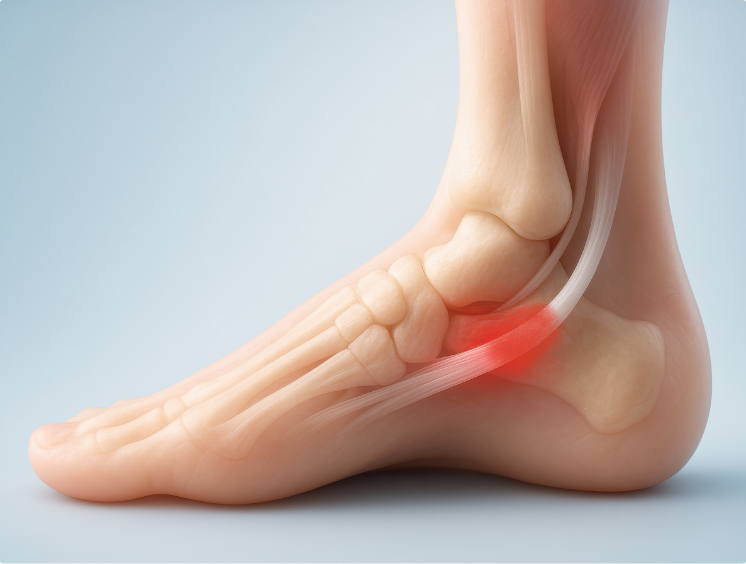
Illustration showing pain around the inside of the ankle
CAUSES OF PTTD

The exact cause of tibialis posterior dysfunction is not fully known, but several contributing factors have been identified, including:

- Obesity

- Flat foot type

- Inflammatory joint conditions such as rheumatoid arthritis

- Degenerative tendon rupture

- Previous surgery or trauma to the area

- Excessive foot pronation

- Diabetes

- Hormonal imbalance

BOOK YOUR APPOINTMENT NOW
WHO IS MOST AFFECTED?
PTTD most commonly affects women between the ages of 40 and 60.

It is also associated with activities involving prolonged standing, walking, or running. Approximately 2.3% to 3.6% of runners may experience this condition.

It is one of the most common causes of Adult Acquired Flat Foot deformity.

SIGNS & SYMPTOMS
Signs and symptoms of Posterior Tibial Tendon Dysfunction (PTTD) typically begin gradually and can progress to significant changes in foot shape and function if not treated early.
INNER ANKLE
PAIN IN
EARLY STAGES
Pain develops along the inside of the ankle without visible deformity at first.
INFLAMMATION
ALONG
THE TENDON
Swelling, redness, tenderness, and warmth may be present along the tendon’s path.
PROGRESSIVE
TENDON
WEAKENING
The tendon may lengthen or rupture over time, reducing support for the foot.
ARCH COLLAPSE
AND
FOOT CHANGES
The foot may flatten and become more rigid, with altered ankle alignment.
LOSS OF
STRENGTH
AND FUNCTION
Adult Acquired Flat Foot Deformity can develop, often affecting one leg, making standing on tiptoes painful and difficult.
Early diagnosis and treatment are essential to slow progression and reduce the likelihood of long-term deformity or the need for surgical intervention.
BOOK YOUR APPOINTMENT NOW
TREATMENTS

This is a condition frequently seen and treated in clinic using a combination of:

- Footwear changes

- Strapping and taping

- Orthotics

- Laser therapy

- Shockwave therapy

- Exercise rehabilitation
BOOK YOUR APPOINTMENT NOW
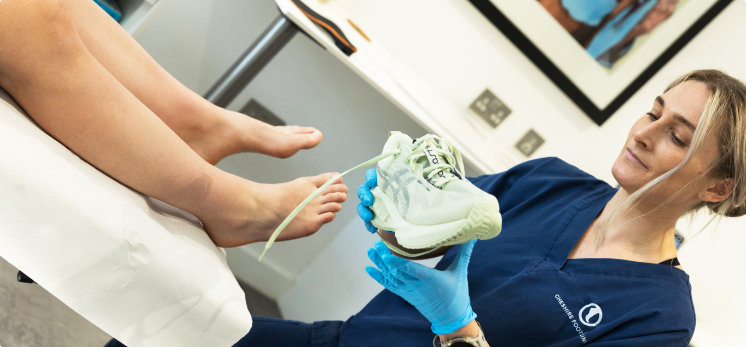
Podiatrist assessing footwear during treatment