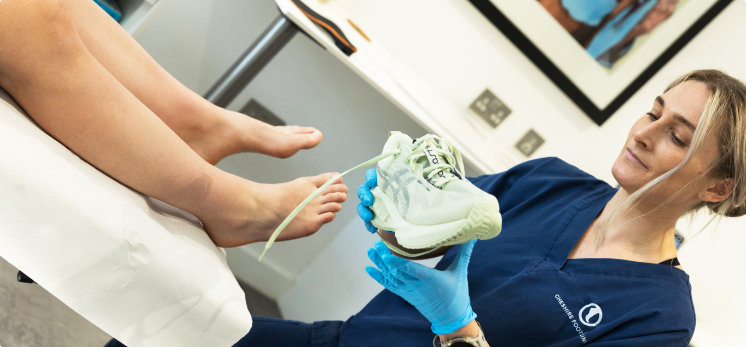
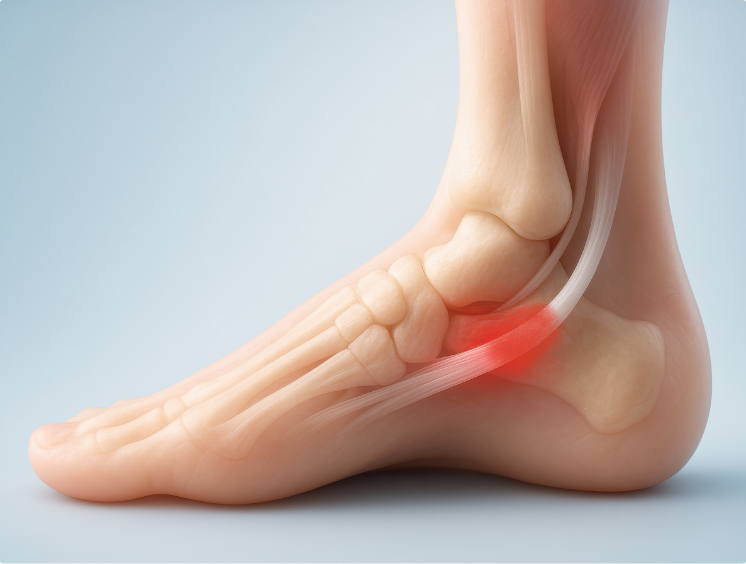
The posterior tibial tendon connects the tibialis posterior muscle at the back of the lower leg to the bones in the centre of the sole of the foot.
It sits deep behind the calf muscles and plays a vital role in supporting foot structure.
The tibialis posterior muscle is responsible for moving the foot downward and inward. The tendon helps stabilise the arch of the foot, support the structures underneath it, and assist in lifting the heel during movement.
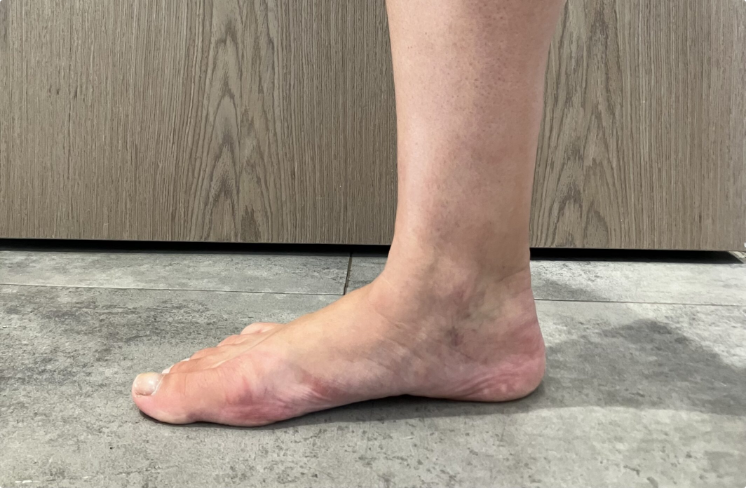
Posterior Tibial Tendon Dysfunction (PTTD) is a disabling condition caused by the loss of function of the tibialis posterior tendon.
The exact cause of tibialis posterior dysfunction is not fully known, but several contributing factors have been identified, including:
- Obesity
- Flat foot type
- Inflammatory joint conditions such as rheumatoid arthritis
- Degenerative tendon rupture
- Previous surgery or trauma to the area
- Excessive foot pronation
- Diabetes
- Hormonal imbalance
It is also associated with activities involving prolonged standing, walking, or running. Approximately 2.3% to 3.6% of runners may experience this condition.
It is one of the most common causes of Adult Acquired Flat Foot deformity.
PAIN IN
EARLY STAGES
ALONG
THE TENDON
TENDON
WEAKENING
AND
FOOT CHANGES
STRENGTH
AND FUNCTION
This is a condition frequently seen and treated in clinic using a combination of:
- Footwear changes
- Strapping and taping
- Orthotics
- Laser therapy
- Shockwave therapy
- Exercise rehabilitation